Social Icons

Pages

Monday, August 20, 2012

Biological Adaptation

In biology, the term "adaptation" is known as the process by which a living thing becomes better suited to its environment. 
This biological adaptation may be of very kind: Structural Adaptations, Functional Adaptations, Color Adaptations and Behavioral Adaptations.
When biologists talk about this term they also use to relate it to the word Survival. There's also the expression "Survival of the Fittest", the explanation is that an environment tends to eliminate living things that are not suited to it. A plant that was not adapted to conserve moisture would soon die in the desert; an animal that stood out from its surroundings would be the most likely to fall prey to its enemies. This process of elimination is called natural selection. The phrase “survival of the fittest” refers to natural selection. Natural selection is an important factor in evolution.

An example of adaptation involving natural selection is found in the case of DDT and houseflies. When this insecticide was first used in the early 1940's, almost all the flies subjected to it were killed. Some, however, survived and continued to reproduce. Eventually only this type of resistant fly was left in the areas where DDT was used over a period of years.
Adaptation is not voluntary, but is based on inherited traits. The diversity of inherited traits is chiefly a result of mutation. Mutation is any change in the inherited characteristics of an organism which results in new traits that will be passed on to the organism's descendants. In any given environment, some traits will be advantageous and others will not. (In forests, the ability of an animal to climb trees might be an adaptation for survival, but on open grasslands speed would be more advantageous.) The organism that is best suited to its environment is most likely to survive and reproduce, and the traits that are not advantageous tend gradually to be eliminated.
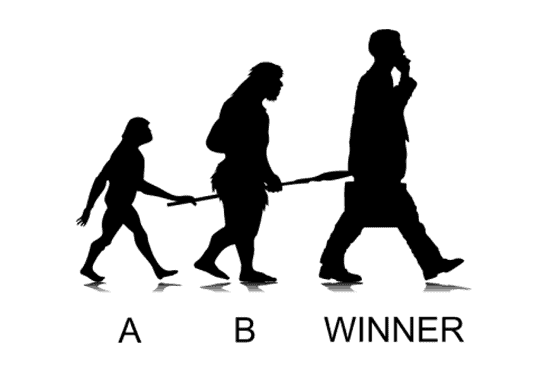
Well, in our case that's how we survived, by evolving:


Saturday, July 7, 2012

10 facts about human body


  • Here's a top list of some humand body facts:

  • 1 - Of the 206 bones in the human body, 1/4 are located in the feet.
  • 2 - The human heart has to pump blood back and forth through the 70,000 miles of blood vessels in the body once every minute.
  • 3 - The stomach has 35 million digestive glands.
  • 4 - Human hair is almost indestructible. It cannot be destroyed by cold, climactic changes, water or other natural forces (except fire). It also can survive exposure to many kinds of acids and corrosive chemicals.
  • 5 -There are 45 miles of nerves in the human body.
  • 6 - It is impossible for a person to keep their eyes open while sneezing.
  • 7 - Human eyes are capable of seeing more than 1 million simultaneous visual impressions and can distinguish between almost 8 million gradations of color.
  • 8 - The amount of pigment melanin in a person’s skin determines what color their skin will be. People with very little melanin have light colored skin, while people with large amounts of melanin have skin that is dark in color.
  • 9 - The human body consists of nine systems: the skeletal system  the muscular system, the nervous system, the hormonal system, the circulatory system, the digestive system, the respiratory system, the immune system and the reproductive system.
  • 10 - The human body has 10 trillion cells living within it.


  • Saturday, June 9, 2012

    Allelopathy


    The term allelopathy was created in 1937 by the investigator Hans Molisch to describe the way plants interact between them to understand the medium around them. The word results from the greek words allélon (mutual) and pathos (prejudice).

    Plants produce and release a great number of molecules resulting from their secundary metabolisms, that are released in the environment, affecting the plants around, their growth, their development and even the germination of some species.

    Saturday, May 19, 2012

    Game Theory

    Game theory is the scientific study of puzzles and has been aplyed to almost all the sciencies that presume choice. Since John Maynard Smith, it has also been aplied to biology. Some of the most important games are the Dove-Hawk Game and the Prisioner's Dilemma.
    The Dove-Hawk Game works on the assumption that doves lose against hawks feeding them, doves have a neutral aproach to each others and hawks just lose points on confrontation with each others.
    You can find an explication here:
    http://www.youtube.com/watch?v=RAKjII7xCdk&feature=player_embedded

    Tuesday, May 15, 2012

    Where to study Biology

    So, are you thinking where to study Biology in Europe? Maybe you can find a helpfull list in this link: http://www.study-info.eu/FLDP.aspx?show=proglist&gid=13&fid=1

    There you can find some of the best programes in the Europe, going from the most basic Bachelor in Biology to Master and PhD programes going through neurosciences to ecology.

    If you are trully thinking in getting a carreer in the biological sciences, this is the list to go through.


    Monday, May 14, 2012

    Ethology


    Ethology, also known as Animal Behaviour, is the branch of Biology that studies the way animals interact with each other, and the environment.
    The favourite areas of investigation are communication, instinct, learning, mating and social interactions.
    Modern Ethology is acknowledged to have a start in the 1930's with the work of the dutch biologist Nikolaas Tinbergen and the austrians Konrad Lorenz and Karl von Frisch on the organization and elicitation of individual and sicial behaviour patterns in animals, winning the 1973 Nobel Prize in Physiology
    Nowadays, ethology has been starting to be integrated with other branches of Biology to, more easily, explain some of the more complex processes. New fields as Neuroethology, Sociophysiology or Ethoecology have been in the vanguard of investigation.
    One of the most recently debated subjects is Altruism.

    Immunology


    Immunology is a branch of Biology that studies the immune system of organisms, its threats and its strenghts.
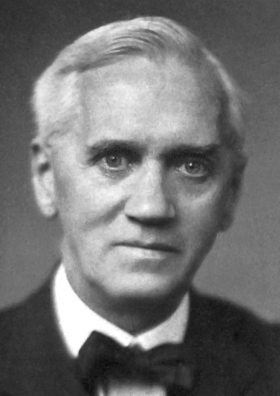
    Modern Immunology began when Alexander Flemming accidentally discovered the properties of Penicillin in 1828. This and his work on antibiotics were the foundation to his Nobel Prize in Medicine in 1945.

    The greatest achievement of immunologists is vaccination. The ability to prepare an individual to most deseases he/she will find in a lifetime is what has permited mankind to erradicate many dangers and increase humans life span.
    One of the principal worries of immunologists today, are the resistent lineages of pathogens originated with the bad usage of antibiotics.